
.
.
.
.
.

Introduction
As technology evolves, the way we watch television is changing. For decades, traditional TV through cable or satellite dominated living rooms. But in 2025, many households are comparing IPTV (Internet Protocol Television) with these older models. Which one offers better value, flexibility, and user experience?
This guide breaks down the differences between IPTV and traditional TV, including costs, features, pros and cons, and why so many viewers are making the switch.
What is Traditional TV?
Traditional TV refers to broadcast services delivered via cable, satellite, or terrestrial signals.
- Requires physical installation (cables, dishes, set-top boxes).
- Often sold in bundled packages with long-term contracts.
- Mostly tied to a single television at home.
What is IPTV?
IPTV (Internet Protocol Television) delivers TV content through an internet connection.
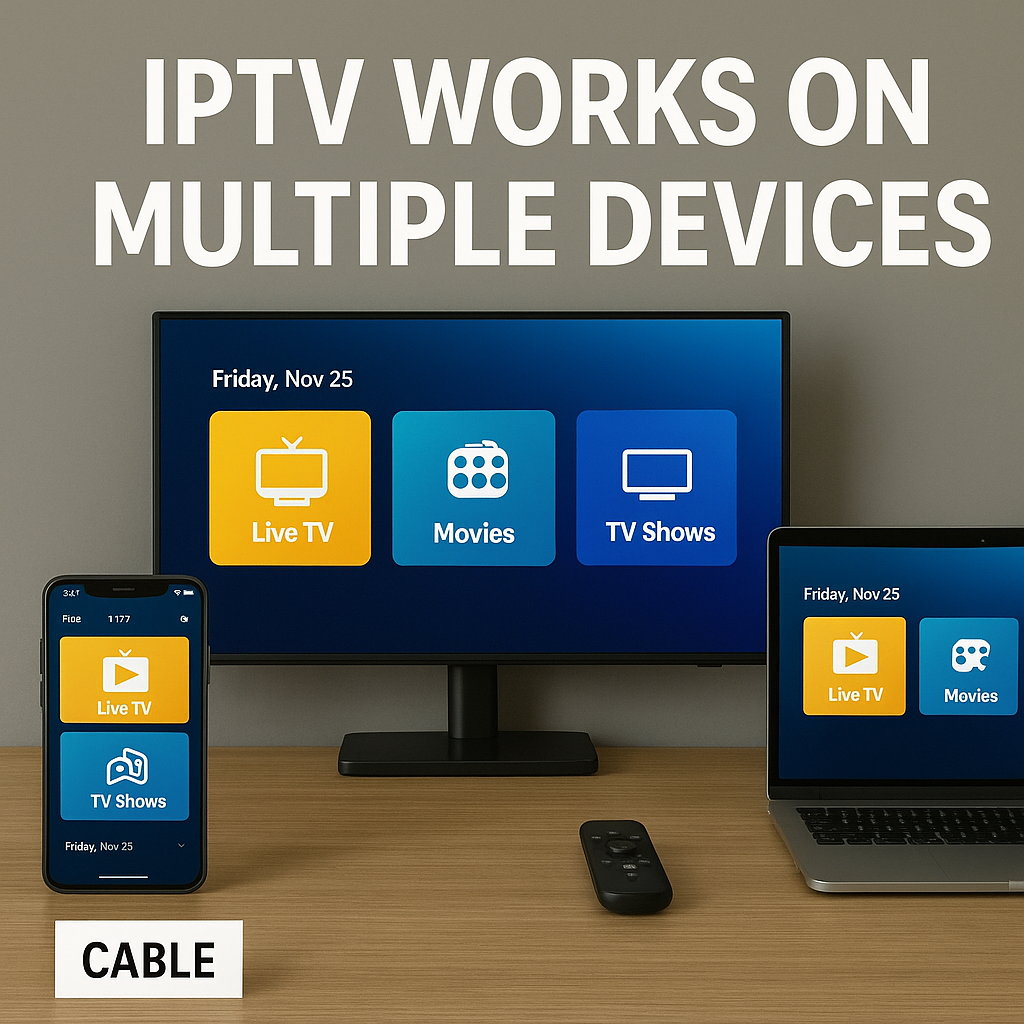
- Works on Smart TVs, streaming devices, smartphones, and laptops.
- Supports live channels, on-demand content, and catch-up features.
- No special hardware needed — just a stable connection and an app.
📚 Learn more: What is IPTV?
IPTV vs Traditional TV – Side-by-Side Comparison
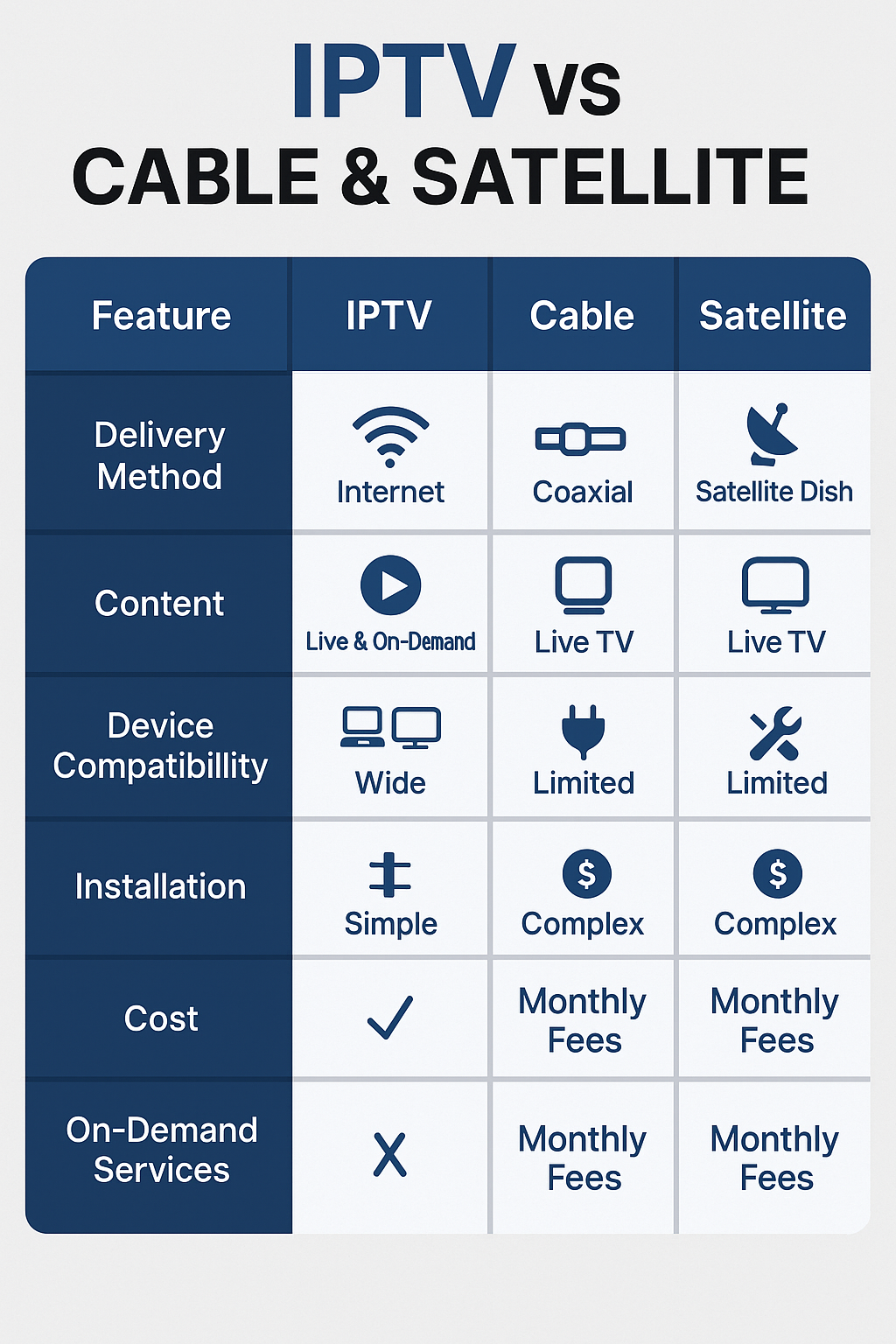
| Feature | IPTV | Traditional TV |
|---|---|---|
| Delivery | Internet | Cable/Satellite |
| Setup | App-based, plug & play | Hardware installation required |
| Devices | TVs, phones, tablets, PCs | Mainly TVs at home |
| Content Flexibility | Global, customizable options | Fixed regional bundles |
| Costs | More flexible pricing models | Higher monthly fees |
| Mobility | Watch anywhere with internet | Limited to home setup |
Pros and Cons of IPTV

Pros & Cons of IPTV
Pros:
- ✅ Flexible pricing and plans
- ✅ Works across multiple devices
- ✅ On-demand content and replay features
- ✅ No physical installation needed
Cons:
- ❌ Requires a reliable internet connection
- ❌ Quality depends on your provider
Pros & Cons of Traditional TV
Pros:
- ✅ Reliable broadcast signal
- ✅ Familiar viewing experience
- ✅ Simple, no apps to manage
Cons:
- ❌ Higher ongoing costs
- ❌ Limited to home TV setup
- ❌ Fixed bundles, less flexibility
Why More UK Viewers Are Switching to IPTV
Households today want flexibility and better value. With IPTV, viewers can stream on any device, watch on-demand shows, and enjoy more control over what they pay for.
According to Ofcom, over half of UK adults now use streaming services as their main form of TV.
Which One is Right for You?

Which One Should You Choose?
Choose IPTV if you:
- Want to watch on multiple devices
- Prefer customizable content options
- Value lower and more flexible subscription models
Choose Traditional TV if you:
Value a stable, always-on broadcast signal
Prefer the familiarity of cable or satellite packages
Don’t want to manage apps or internet-based services
Final Verdict
In 2025, IPTV is becoming the smarter choice for most households. With its affordability, flexibility, and multi-device access, IPTV outshines traditional TV in many areas.
👉 Want to get started? Explore our Top IPTV Providers in 2025 and Buy Your IPTV Subscription.
One Response